Postpartum Back, Hip, and Pelvic Pain: When to See an Orthopedic Specialist
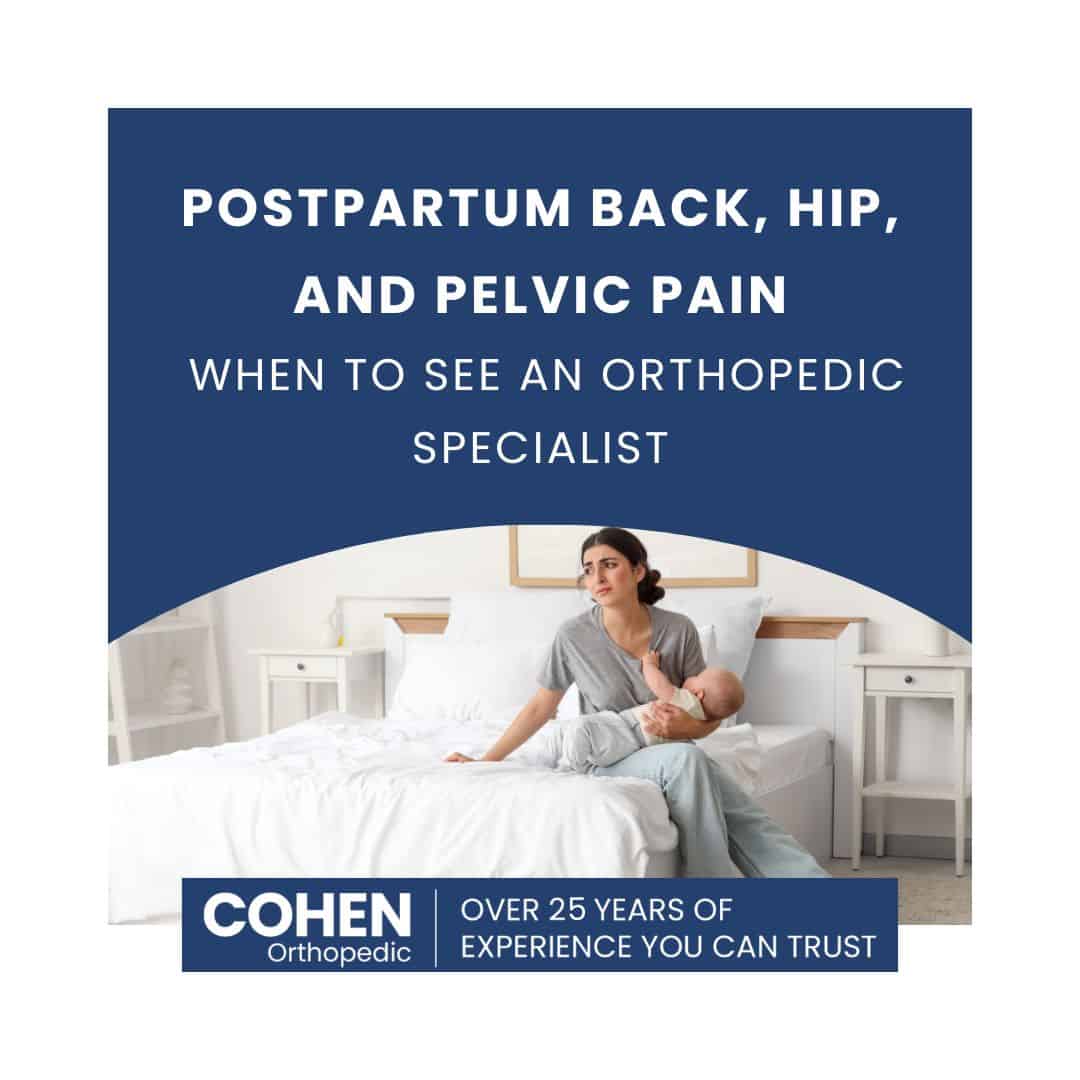
Welcoming a new baby is an exciting time, but it can also come with unexpected physical challenges. Many new mothers experience back, hip, or pelvic pain after childbirth, ranging from mild discomfort to more severe, persistent issues that interfere with daily life. Understanding what’s typical and knowing when to seek help can make a world of difference in recovery.
At Cohen Orthopedic, we focus on helping new mothers identify orthopedic concerns early, provide compassionate care, and guide patients safely back to an active, pain-free lifestyle.
Why Postpartum Pain Happens
Pregnancy and childbirth place unique stress on the body:
- Hormonal changes: Hormones like relaxin loosen ligaments and joints in preparation for childbirth, which can lead to instability and discomfort.
- Weight gain: Carrying extra weight during pregnancy shifts posture and puts extra strain on the spine, hips, and pelvis.
- Muscle changes: Abdominal, pelvic, and back muscles can become stretched or weakened, making it harder to support proper alignment.
- Labor and delivery: Vaginal delivery or cesarean sections can affect pelvic floor muscles, sacroiliac joints, and the surrounding soft tissue.
It’s common for new mothers to experience some level of soreness or mild pain in the weeks after delivery. For many, gentle movement, physical therapy, and time allow the body to recover. But persistent or worsening pain may signal something more significant.
When to Consider Seeing an Orthopedic Specialist
You should reach out to an orthopedic provider if you notice any of the following:
- Pain that lasts longer than expected – Pain that continues beyond a few weeks or months postpartum.
- Difficulty walking or standing – Trouble with basic movements like getting out of bed, standing from a chair, or climbing stairs.
- Sharp or radiating pain – Pain that travels down the legs, into the hips, or into the groin.
- Instability – Feeling like your hip, pelvis, or back “gives out” when moving or standing.
- Limited function in daily life – Pain that affects lifting your baby, doing household tasks, or returning to work.
Seeing an orthopedic specialist early can help identify whether your pain is musculoskeletal, related to ligament or joint instability, or caused by other underlying conditions. Early evaluation often means less invasive treatment, faster recovery, and a safer return to activity.
What to Expect at Your Appointment
An orthopedic specialist will:
- Review your medical history, pregnancy, and delivery details.
- Perform a physical exam to evaluate posture, alignment, and movement.
- Order imaging or diagnostic tests if necessary to assess joints, bones, or soft tissue.
- Develop a personalized treatment plan, which may include physical therapy, targeted exercises, pain management strategies, or, in rare cases, surgical intervention.
Supporting Your Recovery at Home
While seeing a specialist is crucial for persistent pain, there are ways to support recovery at home:
- Gentle movement: Short walks, stretching, and low-impact exercises help maintain mobility.
- Posture awareness: Proper positioning when feeding your baby or lifting can reduce strain on your back and hips.
- Core strengthening: Pelvic floor and abdominal exercises can improve stability and reduce discomfort.
- Rest and recovery: Adequate sleep and breaks are essential for healing.
Don’t Ignore Persistent Pain
Postpartum pain is common, but it shouldn’t prevent you from enjoying your new baby or returning to your normal life. If back, hip, or pelvic pain lingers, worsens, or limits your daily activities, consulting an orthopedic specialist like Dr. Brian Cohen can provide clarity, relief, and a path toward lasting recovery.
Your body worked hard to bring a new life into the world, make sure you’re getting the care you deserve.