
Hip and Knee Replacements in Men: What to Expect
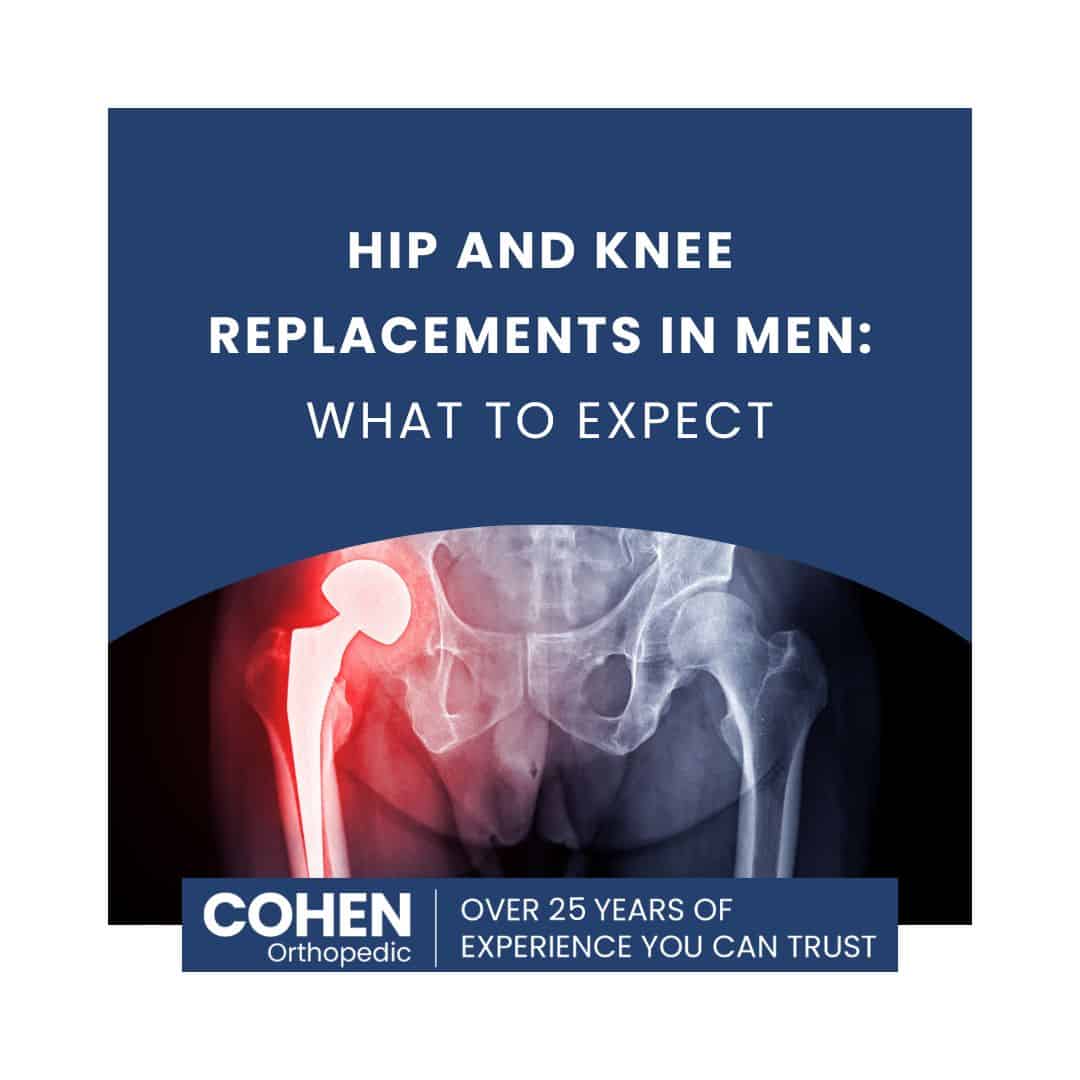
When hip or knee pain starts interfering with the things you enjoy most—walking the dog, working, staying active, or simply getting through the day—it can feel like your world is slowly shrinking.
For many men, especially those who have spent years staying active or working physically demanding jobs, joint pain doesn’t just show up as discomfort. It shows up as limitation, frustration, and a loss of independence.
The good news? Hip and knee replacement surgery is one of the most successful procedures in modern orthopedics—and understanding what to expect can make the journey feel far less overwhelming.
At Cohen Orthopedic, our approach is simple: Professional. Personable. Patient-first. We bring the expertise you expect from a trusted surgeon, with the warmth of a friend by your side. That means real answers, clear communication, and care that focuses on you—not just the joint.
Why Hip and Knee Replacements Become Necessary
Hip and knee replacements are most commonly recommended when joint damage can no longer be managed with conservative care like medication, injections, or physical therapy.
For men, the most common causes include:
- Osteoarthritis (wear-and-tear arthritis over time)
- Previous injuries or trauma
- Repetitive stress from work, sports, or heavy activity
- Degenerative joint disease
When cartilage wears down, bone begins to rub against bone. That’s when pain, stiffness, swelling, and reduced mobility start to take over daily life.
And often, it’s not just pain—it’s the loss of ability to do the things that define your routine and independence.
What to Expect Before Surgery
One of the most important parts of the process happens before you ever enter the operating room.
During your pre-surgical visits, your orthopedic surgeon will:
- Review imaging and confirm the diagnosis
- Discuss your symptoms and activity goals
- Talk through treatment options (including whether surgery is truly the right step)
- Explain what recovery will realistically look like
We believe in skipping the medical jargon and focusing on what matters most: what this means for your life, your work, and your future mobility.
You’ll also receive guidance on:
- Preparing your home for recovery
- Pre-surgical testing
- Medication adjustments
- What support you’ll need after surgery
The goal is simple—no surprises, no confusion, just clarity.
What Happens During Hip or Knee Replacement Surgery
In a joint replacement procedure, the damaged portions of the hip or knee are removed and replaced with a carefully designed artificial joint made of metal, ceramic, or durable plastic components.
The procedure is performed in a sterile surgical setting under anesthesia, and most patients are up and moving within a short period after surgery.
While every case is unique, modern techniques are designed to:
- Reduce pain
- Restore alignment and function
- Improve long-term mobility
- Support a smoother recovery process
Recovery: What Men Should Really Expect
Recovery is often the biggest concern—and the most misunderstood part of joint replacement.
Here’s what’s important to know:
1. You’ll start moving early
Most patients begin walking (with support) within hours or the first day after surgery. Movement is a key part of recovery, not something to avoid.
2. Physical therapy is essential
Rebuilding strength and motion takes time and consistency. Therapy helps retrain muscles and restore confidence in the joint.
3. Progress is steady, not instant
Most patients see significant improvement in:
- Pain levels within weeks
- Mobility over several weeks to months
- Full recovery in a few months depending on overall health and activity level
4. You’ll need patience—but you won’t be alone
Recovery is a process. Our role is to guide, adjust, and support you through each stage so you never feel like you’re navigating it alone.
The Goal Isn’t Just Less Pain—It’s More Life
For many men, joint pain quietly takes away the things they don’t want to give up:
- Yardwork and home projects
- Golf, walking, or exercise
- Work responsibilities
- Time with family without discomfort
Hip and knee replacement surgery isn’t just about fixing a joint. It’s about restoring independence, confidence, and quality of life.
Why Communication Matters in Orthopedic Care
One of the most important parts of your experience isn’t just surgical skill—it’s communication.
We believe patients deserve:
- Clear explanations without medical jargon
- Honest expectations (not false promises)
- A provider who listens first, then treats
- Support that continues long after surgery
Because when you understand what’s happening and why, recovery becomes less intimidating—and far more empowering.
Final Thoughts
Hip and knee replacement surgery can feel like a big step, but for many men, it’s also the step that gets life moving again.
With the right care team, the right information, and the right expectations, it’s not just about replacing a joint—it’s about reclaiming your ability to live fully and move confidently again.
If you’re dealing with ongoing hip or knee pain, you don’t have to push through it alone. There are answers. There are options. And there is a path forward that puts you first.