Running After 40: Orthopedic Tips for Longevity and Injury Prevention
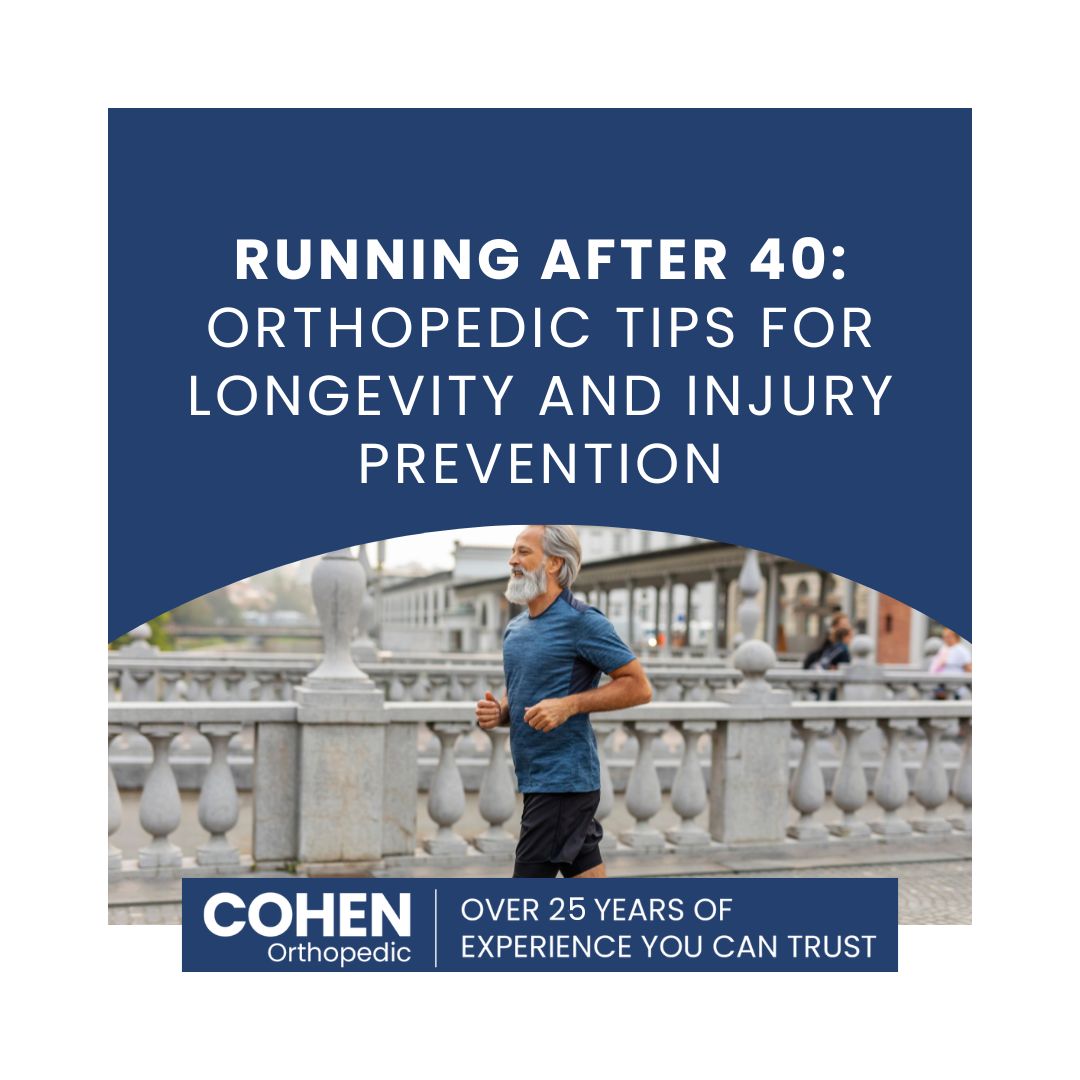
Running after 40 isn’t just possible, it can be one of the most powerful ways to support your cardiovascular health, bone density, mental clarity, and overall longevity.
But it does require intention. As orthopedic providers, we often see two types of runners in this age group:
- Those who stop running because they assume pain is inevitable
- Those who push through pain because they assume it’s normal
Neither approach supports long-term joint health. Let’s talk about how to run smarter, protect your joints, and stay active for years to come.
First: Understand What Changes After 40
Your body is still highly capable, but it does adapt differently than it did at 25. Common changes include:
- Slower muscle recovery
- Gradual loss of muscle mass
- Reduced tendon elasticity
- Decreased bone density
- Longer recovery timelines after strain
These changes don’t mean you should stop running. They mean your training plan should evolve. Longevity requires strategy.
Strength Training Is Not Optional
If there’s one orthopedic recommendation we consistently emphasize, it’s this: strength training protects runners. Strong muscles reduce the load placed directly on your joints. Focus on:
- Glute strength
- Core strength
- Hamstrings and quadriceps
- Calf strength
Two to three strength sessions per week can significantly reduce injury risk. Running alone is not enough.
Respect Recovery Time
After 40, recovery becomes just as important as mileage. Signs you may need more recovery:
- Persistent soreness beyond 48 hours
- Decreasing performance despite consistent training
- Sleep disturbances
- Lingering joint stiffness
Incorporate:
- At least one full rest day per week
- Low-impact cross-training (cycling, swimming, elliptical)
- Proper sleep hygiene
- Mobility work and stretching
Rest is not regression. It is an adaptation.
Pay Attention to Early Warning Signs
We often remind patients: pain is information.
Normal muscle soreness feels dull and improves with movement. Concerning pain tends to:
- Be sharp or localized
- Worsen with activity
- Persist or increase over time
- Cause swelling or instability
Common running-related orthopedic issues after 40 include:
- Patellofemoral pain
- Achilles tendinopathy
- Plantar fasciitis
- Hip bursitis
- Early arthritic joint irritation
Addressing symptoms early prevents minor irritation from becoming a prolonged injury.
Footwear and Surface Matter More Than You Think
Running shoes should match your gait pattern and be replaced regularly, typically every 300-500 miles.
Additionally:
- Alternate running surfaces when possible
- Avoid sudden shifts from treadmill to pavement without adjustment
- Increase mileage gradually
Small mechanical adjustments can significantly reduce joint stress over time.
Mobility Is a Long-Term Investment
Joint stiffness becomes more common with age. Prioritizing mobility helps maintain:
- Hip range of motion
- Ankle dorsiflexion
- Thoracic spine rotation
Even 10-15 minutes of focused mobility work several times per week can improve stride efficiency and decrease compensatory strain. Mobility is not about flexibility alone, it’s about preserving joint mechanics.
Consider Bone and Hormonal Health
For many runners over 40, particularly women approaching or in menopause, bone density becomes an important consideration.
Weight-bearing exercise like running supports bone health, but adequate:
- Calcium
- Vitamin D
- Protein intake
- Hormonal balance
are also critical for long-term skeletal strength. If you have a history of stress fractures or significant hormonal changes, proactive evaluation is worthwhile.
Redefine Performance
Running after 40 may not look the same as it did in your 20s, and that’s okay.
Longevity-focused runners shift their mindset from:
Chasing personal records
to
Preserving joint health and consistent movement
Steady miles over dramatic spikes. Sustainable progress over short-term intensity. The goal isn’t to outrun aging. It’s to move well within it.
When to Seek Orthopedic Guidance
Consider an evaluation if you experience:
- Pain lasting more than two weeks
- Recurrent injuries in the same area
- Swelling that does not resolve
- Instability or altered gait
A structured assessment can identify biomechanical issues, muscle imbalances, or early joint degeneration before they become limiting.
Clear answers reduce uncertainty, and prevent unnecessary downtime.
The Bigger Picture
Running after 40 can support:
- Cardiovascular health
- Metabolic health
- Bone density
- Mental resilience
- Independence later in life
The key is thoughtful training, proactive care, and realistic expectations.
You don’t need to stop running to protect your joints. You need to train with intention, recover with discipline, and address concerns early. Longevity isn’t about pushing harder. It’s about moving smarter, so you can keep running for decades to come. And if questions arise along the way, we’re here to guide you, with expertise you trust and care that puts you first.